



Creating and Strengthening Brands from Northeast Asia to Perform in SEA and Across Asia-Pacific
As companies from Japan, Korea and Taiwan expand into Southeast Asia and the wider Asia-Pacific region, they step into markets defined by rapid urbanisation, digital acceleration and evolving talent expectations. Operational expertise may travel well. Brand requires deliberate translation.
To perform across Southeast Asia, Northeast Asian organisations must align legacy with ambition, scale with sensitivity and engineering strength with human relevance.
Translating Global Purpose into Regional Employer Strength
For Terumo, founded in Tokyo in 1921 and operating in more than 160 countries, global brand equity is firmly established. Its purpose to advance healthcare and enhance patients’ quality of life carries weight worldwide. Yet when Terumo launched its Employer Value Proposition, Advancing Healthcare with Heart, the question was how to make this meaningful for associates across Asia Pacific. A purpose statement alone does not shape culture. It must be embedded into daily experience.
We partnered with Terumo to develop a regional employer brand platform, Advancing as a T-Talent. The strategy spanned internal and external communications, employee guidelines, video storytelling and office environment design. By aligning the physical workspace with the EVP, culture became visible and tangible.
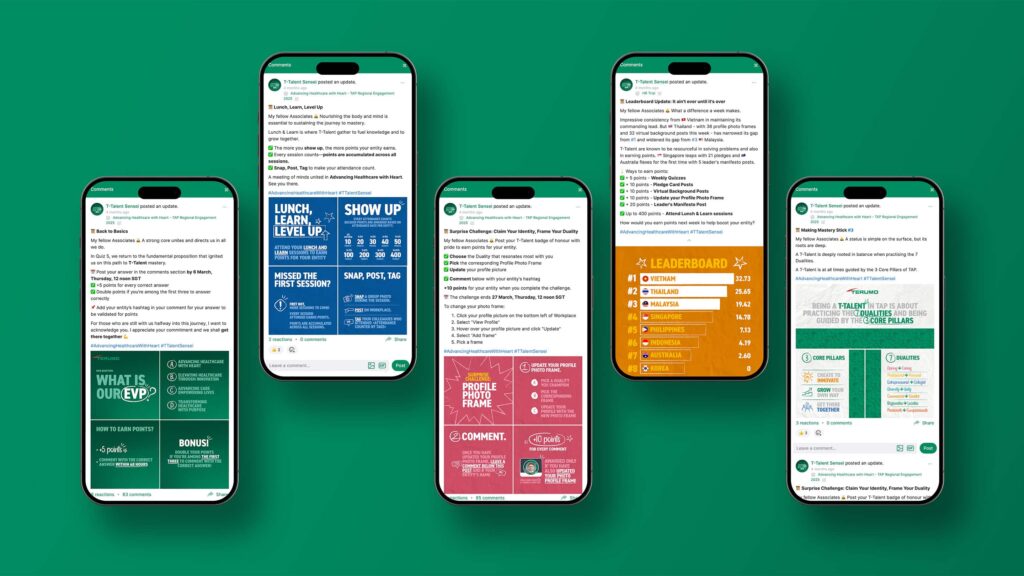
For Northeast Asian companies expanding into Southeast Asia, this alignment is critical. Talent in Singapore, Vietnam and Indonesia expects clarity of mission and authentic leadership. Employer brand becomes a strategic lever for attraction and retention, particularly in knowledge-intensive sectors.
Evolving Engineering Heritage into a Global Urban Brand
Korean conglomerates entering Southeast Asia often bring formidable engineering credentials. The challenge lies in translating that legacy into a distinct and future-facing identity.
GAYA Strategic Enterprise Corporation, the global real estate arm of GS E&C, was established to shape the next generation of urban developments across Asia and beyond. While backed by one of South Korea’s largest construction groups, GAYA required its own positioning to signal ambition, sustainability and technological leadership.
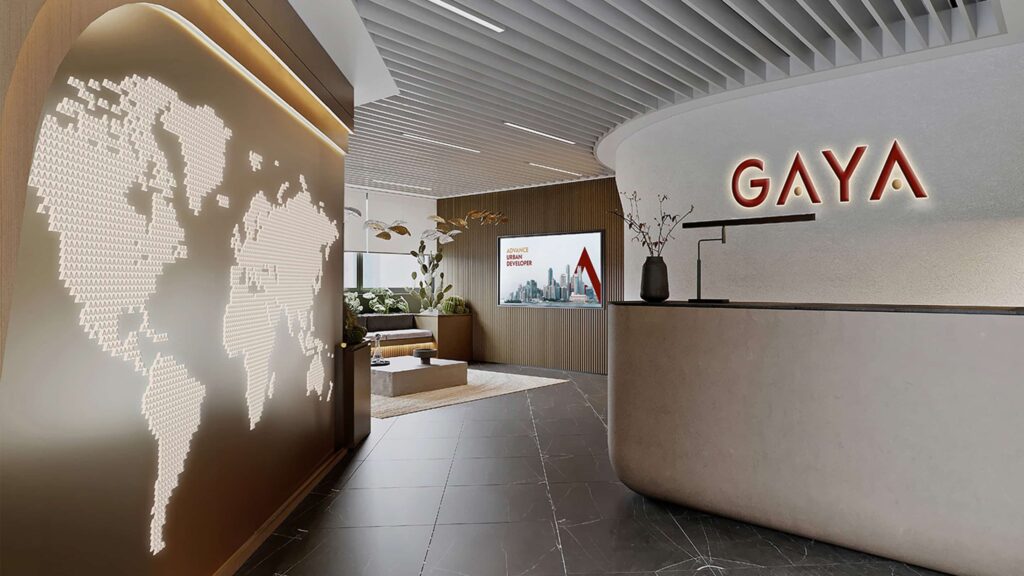
We developed a brand strategy positioning GAYA as Advanced Urban Developers, reflecting its commitment to creating integrated urban ecosystems. The identity centred on a distinctive apex-inspired “A” symbol, expressing excellence, upward momentum and enduring partnerships.
This clarity allowed GAYA to bridge legacy and vision. It distinguished the new entity from its parent while reinforcing the credibility of its engineering foundation. As Southeast Asia accelerates its urban transformation, such strategic positioning strengthens confidence among investors, partners and governments.
For Northeast Asian real estate brands, corporate narrative and digital presence are as important as project delivery. A cohesive brand system ensures that each development contributes to a recognisable and trusted regional platform.
Accelerating Market Leadership Through Innovation-Led Positioning
When established technology brands introduce breakthrough solutions, the challenge is not only technological advancement but also market perception. Fujifilm’s introduction of its new generation of industrial digital inkjet printers demonstrated this dynamic clearly. The technology represented a significant leap forward, enabling the company to move ahead of competing solutions already present in the market.
Yet technological advantage alone does not automatically translate into category leadership. In the Asia-Pacific market outside Japan, Fujifilm needed to strengthen its presence and close the perception gap with established competitors. The launch therefore required a communications strategy that balanced rational product performance with a more aspirational narrative around innovation, productivity and future-ready print capabilities.
By aligning messaging across multiple communication touchpoints, the launch platform translated technical superiority into a compelling brand story. This integrated approach allowed Fujifilm to reinforce credibility among industry decision-makers while positioning the new printer range as a catalyst for transformation within the commercial printing landscape.
From Strong Origins to Regional Leadership
Across healthcare, urban development and consumer goods, a shared insight emerges. Companies from Northeast Asia possess deep technical capability and disciplined execution. To thrive in Southeast Asia and across Asia-Pacific, they must complement these strengths with strategic brand clarity.
This means articulating purpose in ways that resonate culturally. It means aligning employer experience with corporate ambition. It means building brand architectures that can stretch across markets without fragmentation.
As Asia-Pacific becomes increasingly interconnected, the brands that perform best will be those that translate strong origins into contemporary regional leadership. Creating and strengthening brands is therefore not cosmetic. It is foundational to earning trust, mobilising talent and sustaining growth across diverse and competitive markets.
References
https://www.sedgwick-richardson.com/work/advancing-talent/
https://www.sedgwick-richardson.com/work/activating-terumos-employer-value-proposition-through-a-meaningful-engagement/
https://www.sedgwick-richardson.com/work/creating-a-distinctive-brand-identity-for-a-pioneer-of-urban-landscapes/